Reducing Barriers in a Digital Well-Being Learning Activity
For our group’s Learning Design Blueprint, one of the activities we have proposed is the “Notifications Challenge” in Subtopic 1: Platform Design and Persuasive Technology. In this activity, learners disable non-essential social media notifications for 24 hours, track how often they reach for their phone, and reflect on whether the habit is triggered internally or externally.
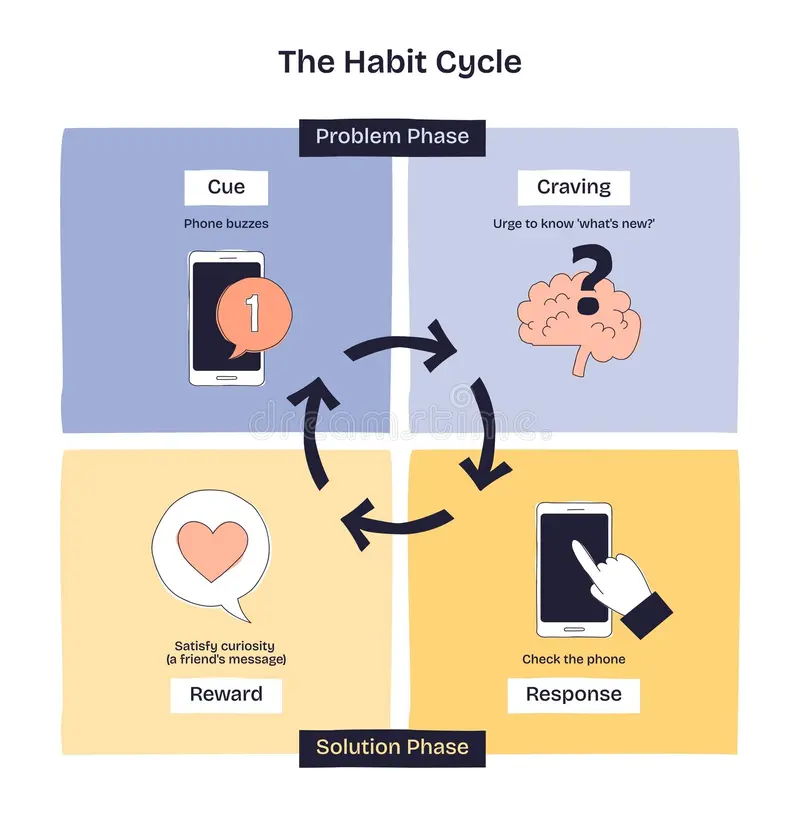
Chart of notification habit loop
I like this activity because it makes persuasive design visible in a personal and practical way. However, after thinking about barriers to student success, I realized that the original plan assumes all learners can comfortably disconnect from notifications for a full day. That is not true for everyone.
Potential barriers
Some students rely on social media notifications for legitimate reasons: work shifts, family communication, campus group chats, accessibility supports, or mental health check-ins. Others may experience anxiety when disconnecting from apps, especially if they are used to constant communication (Montag et al. 2019). Students with ADHD or executive functioning challenges may also find it difficult to remember to track their phone-checking behaviour consistently throughout the day.
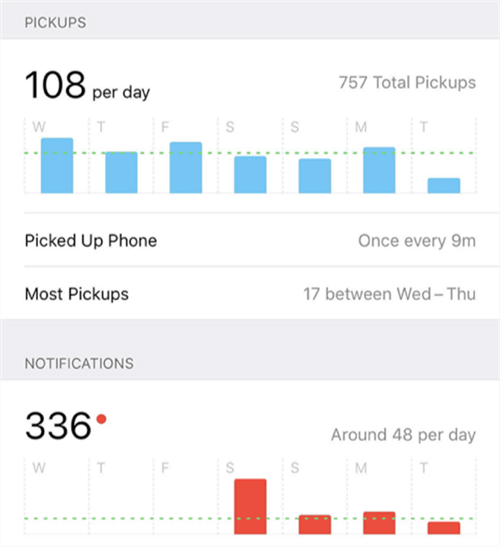
Image of phone pickups and notifications summary on Apple devices
There is also a practical barrier: the activity depends on learners owning a smartphone with customizable notification settings and screen-time tracking tools. While many students do, not all devices or operating systems work the same way, which can create frustration before the learning even begins.
How I would adjust the activity
To reduce these barriers, I would redesign the activity around choice, flexibility, and scaffolding, which aligns with Universal Design for Learning (UDL) principles.
- Offer multiple participation options. Instead of requiring a full 24-hour notification shutdown, learners could choose one of three options:
- Disable notifications for 24 hours.Disable notifications for a 4-hour focused block.Silence only one high-use app (e.g., TikTok or Instagram) for a day.
- Provide a simple tracking template. Rather than expecting students to remember their behaviour, I would include a quick note-taking template or downloadable checklist. Learners could mark a tally each time they instinctively check their phone. This reduces cognitive load for students with ADHD or busy schedules.
- Include an alternative reflection pathway. For students unable to change notification settings, I would allow them to complete a “digital observation” version of the activity. They could observe and document persuasive design features on their usual apps without altering their device settings.
- Normalize different experiences. In the instructions, I would explicitly state that discomfort, anxiety, or increased awareness during the activity is normal and that the goal is observation, not “perfect” digital discipline. This helps reduce shame-based responses and supports a more reflective learning environment.
Why these changes matter
These adjustments keep the core learning outcome intact: helping learners recognize how platform design shapes behaviour and attention. At the same time, they make the activity more accessible and realistic for a diverse group of university students with different schedules, responsibilities, and neurodivergent needs.
As someone who is also a busy student balancing coursework and work, I know that “simple” assignments can become stressful when they assume everyone has the same time, technology, or capacity. Designing with flexibility from the start makes learning more equitable and effective (CAST, 2018).
References
Montag C, Lachmann B, Herrlich M, Zweig K. Addictive Features of Social Media/Messenger Platforms and Freemium Games against the Background of Psychological and Economic Theories. Int J Environ Res Public Health. 2019 Jul 23;16(14):2612. doi: 10.3390/ijerph16142612. PMID: 31340426; PMCID: PMC6679162.
CAST. (2018). Universal Design for Learning Guidelines version 2.2. https://udlguidelines.cast.org/
Harris, T. (2017, April). How a handful of tech companies control billions of minds every day [Video]. TED Conferences. https://www.ted.com/talks/tristan_harris_how_a_handful_of_tech_companies_control_billions_of_minds_every_day
Taylor, J. (2022, August 30). What are pickups in Screen Time on iPhone? iMobie. https://www.imobie.com/support/what-are-pickups-in-screen-time.htm
Hi Zoe,
I really enjoyed reading your post. Digital well-being, and being able to step away from the screen is becoming increasingly difficult to navigate, especially in such a digital age. I think this is a really interesting activity you proposed for your interactive resource, as it really allows students to reflect on why they feel so drawn to their devices. I really appreciate how you touched on the practicality behind asking students to step away from social media, when for a lot of youth that is how they stay connected, not just how they absorb content. I also appreciate your use of images and graphs to grab your viewers attention, it is a great way to provide further context without overwhelming the reader with a lot of text. Thanks for sharing!